
How Pips Calculators Help Forex Traders in Nigeria
📊 Master forex trading in Nigeria with pips calculators that show how much each price move means for your trade. Manage your ₦ risk smartly and boost results today!
Edited By
Robert Finch
In derivatives trading, understanding how to calculate pips is a fundamental skill that shapes effective decision-making. Unlike spot trading where a pip often represents a fixed decimal movement, in derivatives like futures and options, pip calculation can vary depending on the underlying asset and contract specifications.
A pip, short for 'percentage in point', typically measures the smallest change in the price of a financial instrument. For forex traders, this is usually 0.0001 of a currency pair's price, but derivatives traders must pay closer attention to each contract’s tick size and value as these dictate the pip's worth.
Accurate pip calculation directly affects how traders manage their risk and set profit targets across markets including forex, commodities, and indices.
Take, for example, a futures contract on crude oil. The price moves in ticks, which might be $0.01 per barrel. If the contract size is 1,000 barrels, each tick movement equals $10 per contract. Here, one pip equals one tick, but its Naira value differs by contract size. In contrast, for a forex derivative on EUR/USD, a pip is still 0.0001, but because the contract size and leverage vary, the Naira equivalent changes accordingly.
Understanding these nuances helps traders measure potential profits and losses with precision. Traders often use pip value calculators or refer to trading platforms to confirm pip size for derivatives before entering trades.
To sum up, pip calculation in derivatives is not a one-size-fits-all. It depends on:
The type of derivative product (futures, options, CFDs)
Contract specifications like tick size and contract size
Market conditions and currency conversion rates
Next sections will explore specific pip calculation methods for various derivatives and show how this knowledge improves trading strategy and risk control in practical terms.
Understanding what a pip represents is essential for traders dealing with derivatives. The pip serves as the smallest measure of price movement, directly impacting how profit and loss are calculated. In derivatives trading, where prices can move in tiny increments yet have significant financial consequences, grasping the concept of pip ensures better control over risk and sharper decision-making.
A pip is essentially the minimum price change that an asset can exhibit in trading. For forex, it often represents a movement in the fourth decimal place; for instance, a shift from 1.2345 to 1.2346 is one pip. This minute change may appear trivial but becomes crucial when scaled over large contracts. For example, a ₦1 million forex contract moving just 10 pips can translate to a meaningful gain or loss.
Pip values differ widely depending on the market and asset. In commodities like crude oil or gold, price changes are sometimes quoted in ticks, which might represent fractions larger or smaller than a forex pip. Indices generally use index points, where one point could be worth multiple pips depending on contract details. Knowing these differences helps traders adjust their expectations and strategies accordingly.
Unlike spot markets where actual currency exchanges hands immediately, derivatives are contracts with specified sizes and expiry dates. These contracts define how much a single pip is worth. For instance, in a gold futures contract, a one-pip move might equal ₦200, while that same pip in a forex mini lot may represent ₦50. Traders must align their pip calculations to these specifications to avoid misjudging positions.
The monetary value attached to pip movement directly affects traders’ profit or loss. A trader buying a crude oil derivative at ₦25,000 per barrel might see a 5-pip rise increase profits by ₦1,000. Conversely, a sudden 20-pip drop on an index derivative can wipe out a sizable portion of invested capital quickly. Accurate pip tracking helps traders set realistic stop-loss and take-profit points, especially vital in Nigeria’s volatile markets where sudden price swings occur frequently.
Precise understanding of pip measurement ensures you’re neither caught off-guard by unexpected losses nor missing opportunities when prices shift by seemingly small amounts.
By focusing on these concrete aspects, traders in Nigeria and beyond can navigate derivatives more confidently, tailoring their strategies to real market movements rather than guesswork.
Calculating pips accurately is central to derivatives trading. It helps you understand price movements and assess potential profits or losses clearly. Unlike spot markets, derivatives involve contract specifications that influence pip values, so knowing how to calculate pips properly is essential for managing risk and optimising trades.
At its core, pip calculation involves measuring the price difference divided by the pip size. The pip size is the smallest price increment a market can move, for example, 0.0001 in most forex pairs. If EUR/USD moves from 1.1350 to 1.1365, the price difference is 0.0015. Dividing this by the pip size of 0.0001 gives 15 pips. This approach is straightforward and works across many derivatives.
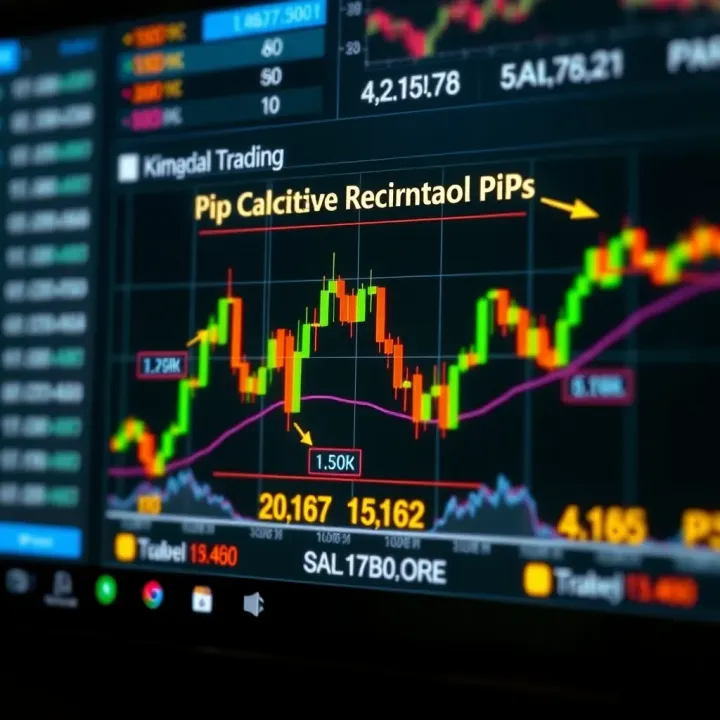
For forex derivatives, this formula directly translates to understanding gains or losses. Suppose you buy a EUR/USD futures contract at 1.1350 and sell at 1.1365; the 15-pip move represents potential profit or loss before transaction costs. This clarity helps a trader size positions and set stop losses precisely.
However, pip value isn’t just about price movements. Contract size affects how much a pip is worth in monetary terms. For example, if a standard forex contract represents 100,000 units of currency, each pip movement might equal $10. But if you trade a mini contract of 10,000 units, each pip is worth only $1. Knowing your contract size means understanding the real impact of each pip.
Leverage further influences this calculation. Say you utilise 10x leverage on a ₦1,000,000 position in a derivative contract; your effective exposure becomes ₦10,000,000. A 10-pip move, which might normally gain or lose ₦100,000, now magnifies accordingly. This leverage amplifies both profit and loss, so factoring it in helps avoid costly mistakes.
Accurate pip calculation considering price difference, contract size, and leverage ensures you’re fully aware of trade risks and rewards before committing your capital.
Taking time to calculate pips wisely is not just a technical exercise but a vital practice to keep your trading strategy sharp and risk controlled, especially in volatile Nigerian markets where naira value shifts can alter real outcomes.
Understanding how pip calculations vary across derivative instruments is essential for traders aiming to manage risks effectively and sharpen their trading strategies. Different markets such as forex, commodities, and indexes each have unique ways of measuring price movements, which affect profit and loss assessments. Knowing these distinctions can help you avoid costly mistakes and adapt your approach based on the instrument you trade.
Forex derivatives are often standardised in terms of contract sizes, commonly referred to as lots. A standard lot usually covers 100,000 units of the base currency. Mini lots represent 10,000 units, while micro lots cover 1,000 units. The pip value directly depends on the lot size, so a 1 pip move in a standard lot equates to a larger profit or loss than the same move in a mini or micro lot. For example, if trading the USD/NGN pair, a 1 pip change in a standard lot could mean ₦1,000 gain or loss, whereas in a micro lot, you’re dealing with just a tenth of that amount.
This distinction matters, especially for retail traders managing smaller accounts. Selecting smaller lot sizes limits exposure while allowing practice of pip calculations in real market conditions.
Not all currency pairs quote prices to the same decimal places. Most forex pairs use four decimal places, making 1 pip equal to 0.0001 of the quote price. However, pairs involving the Japanese yen quote only two decimal places, so here a pip equals 0.01. This affects how you calculate the pip value and potential profits.
For instance, when trading USD/JPY, a 1 pip move differs in magnitude compared to EUR/USD. For Nigerian traders dealing with pairs like USD/NGN, which often have 2 or 3 decimal places depending on the broker, paying attention to this detail changes your pip calculation and risk management approach.
Commodity derivatives like gold, crude oil, and agricultural products trade differently from forex pairs. Their price movements are often measured in ticks rather than pips. For example, gold futures typically quote prices in dollars and cents per ounce, with the minimum tick size often set at 0.10 or 0.01 depending on the exchange.
For Nigerian traders investing through commodity futures or CFDs, recognising how price units translate to pip or tick values ensures accurate calculation of gains or losses, especially when naira conversion fluctuates.
While forex pips are standardised, commodity ticks vary widely. A tick in crude oil futures might represent a change of $0.01 per barrel, but the contract multiplier determines the real value to the trader. This variability makes tick value knowledge essential for setting stop-losses or calculating position sizes.
In practice, understanding these differences helps avoid confusion. For example, a 10-tick gain in gold might not equal the same profit as a 10-pip move in forex.
Index derivatives track price changes in broad market indices like the NSE 30 or the Dow Jones. Each movement in the index is often called a point, but traders sometimes treat these as pips for convenience. However, since indices measure a composite value rather than currency pairs, the logical step is to translate these index points into pip-like units based on the derivative’s contract specifications.
This helps traders quantify risk and return more similarly to forex trading, facilitating easier comparison across asset classes.
The contract multiplier defines how much each index point movement is worth in monetary terms. For instance, if an index contract has a multiplier of ₦50, one point move equals ₦50 profit or loss per contract. Nigerian traders must factor in the multiplier when calculating pip-equivalents because the raw point change doesn’t directly reflect real gains or losses.
Failing to apply contract multipliers can lead to significant misjudgments in position sizing and risk exposure.
Whether managing forex lots, ticking commodity prices, or tracking index points, understanding the unique pip or tick calculation for each derivative instrument is key for accurate performance measurement and effective risk control.
Pip calculators simplify the process of determining the value of a pip in derivatives trading, especially when dealing with complex contracts and varying currency pairs. For Nigerian traders who juggle multiple markets—forex, commodities, and indices—these tools save time and reduce errors that could affect profit and loss calculations.
Local versus international tools: Nigerian traders have access to both local and international pip calculators. Local tools often incorporate the Nigerian Naira (₦) for direct conversion, making it easier to understand potential profits or losses without extra currency conversion steps. For example, a pip calculator integrated with Nigerian banks or fintech platforms like Paystack or Kuda can automatically factor in current exchange rates, reflecting more accurate figures relevant to the Nigerian market.
International calculators, on the other hand, cover a wider range of asset classes and exotic currency pairs, useful for traders dealing with global derivatives beyond just forex. While they provide broader options, traders in Nigeria should cross-check foreign exchange rates as some calculators might not be updated with the latest NGN/USD rates.
Features to look for: When choosing a pip calculator, traders should prioritise accuracy and adaptability. Key features include:
Options to input different contract sizes, leverage levels, and margin requirements, to closely match the actual trade conditions.
Support for various derivative instruments such as forex pairs with irregular decimal places, crude oil, gold, and index futures.
Real-time currency conversion, especially for NGN, so traders see pip values in their local currency.
User-friendly interface for quick calculations during market hours.
Availability on mobile devices, crucial for busy traders who need to check pip values on the go amid traffic or power issues.
When to rely on calculators: Automated pip calculators are invaluable when dealing with complex derivatives or large numbers of trades. For instance, a forex trader who frequently changes contract sizes and leverages will find manual calculation tedious and prone to slips. The calculator rapidly shows potential profits, stopping levels, and margin impact, helping traders act decisively without delay.
However, traders should still understand the basic manual formulas because calculators can sometimes miscalculate due to incorrect inputs or outdated exchange rates. Knowing how to manually calculate a pip—such as dividing the price difference by the pip size—helps verify automated results.
Double checking results for accuracy: Despite technology’s convenience, blindly trusting pip calculators can introduce costly mistakes. For Nigerian traders, who often deal with naira conversion and live in a market influenced by currency volatility, it's crucial to reconcile calculator outputs with manual checks or alternative tools.
A practical way is to run a quick manual calculation for small trades or use two different pip calculators and compare figures. This practice ensures that you do not improperly size trades or misjudge risk, which can be especially costly during high market volatility or ember months when unexpected moves are common.
Always remember: your pip calculation affects your stop-loss, take-profit, and overall risk management—make it reliable.
Using pip calculators smartly, alongside a firm grasp of manual techniques, arms Nigerian traders with precision and confidence needed in derivatives trading.
Accurately calculating pips forms the backbone of effective derivatives trading. Small errors in pip estimation can quickly spiral into significant financial losses, especially when leverage amplifies movements. For Nigerian traders dealing in forex or commodities, a clear grasp of pip values translates into better control over risk exposure and profit potential.
Determining appropriate stop-loss levels helps traders contain losses when the market moves against their position. Setting stop-loss orders based on precise pip calculations means you can define clear risk boundaries. For example, if trading USD/NGN futures, knowing that a single pip represents a certain fraction of a naira ensures that your stop-loss order prevents losses exceeding your risk appetite.
Calculating potential profits and losses in naira gives a practical perspective on trade outcomes. Suppose you enter a crude oil derivative with a contract size where one pip equals $0.10. If the price moves 100 pips in your favour, you need to convert this gain into naira to understand its real impact, especially given naira’s exchange rate fluctuations. This exact pip-to-naira conversion helps you track performance accurately, avoid overexposure and plan tax obligations.
Timing trades with pip movement expectations is vital for success. Traders who measure expected pip swings can better decide when to enter or exit positions. For instance, in volatile forex pairs like EUR/USD or USD/NGN, anticipating a 20-pip shift helps in timing trades to maximise gain or minimise loss.
Avoiding costly miscalculations through meticulous pip monitoring safeguards capital. An oversight in pip calculation can turn what was expected to be a modest profit into a heavy loss. Say you forget to adjust pip value for leverage in your position sizing; your loss will multiply unexpectedly. Accurate pip evaluation reduces costly errors by ensuring every position is sized and managed properly.
Precise pip calculations serve as a compass, guiding your trading decisions towards sound risk control, profit optimisation, and overall strategy success.
By focusing on accurate pip measurement, traders in Nigeria can better navigate market uncertainties and make smarter, more confident trading choices.
📊 Master forex trading in Nigeria with pips calculators that show how much each price move means for your trade. Manage your ₦ risk smartly and boost results today!
Find your ideal trading broker in Nigeria 🇳🇬 by exploring regulations, fees, platforms & support. Perfect for beginners and pros to trade smart! 💹
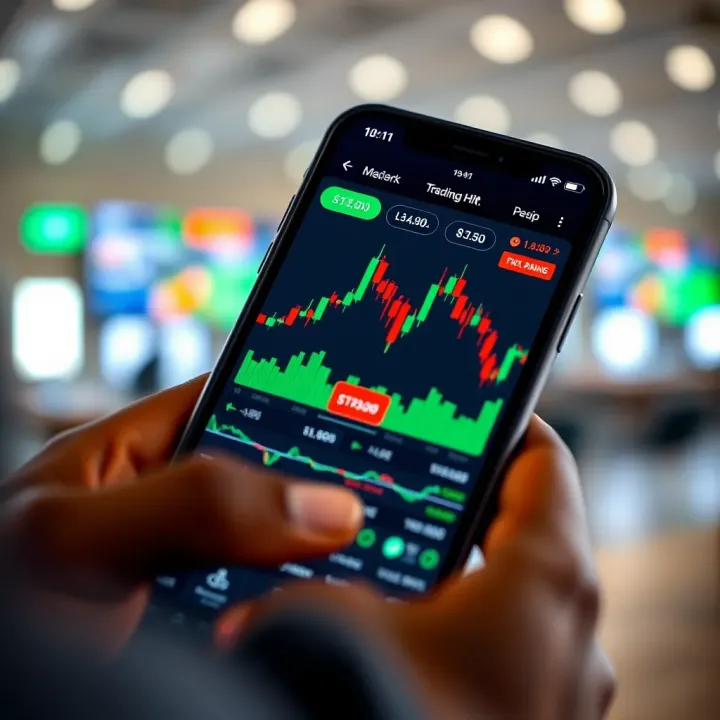
🔍 Explore top trading apps in Nigeria! Compare features, usability, and security to pick the best platform for confident trading in the local market.

📈 Explore coin trading in Nigeria—learn types, strategies, risks, and where to trade safely. Boost your portfolio beyond tokunbo and mama put investments today! ₦
Based on 11 reviews