
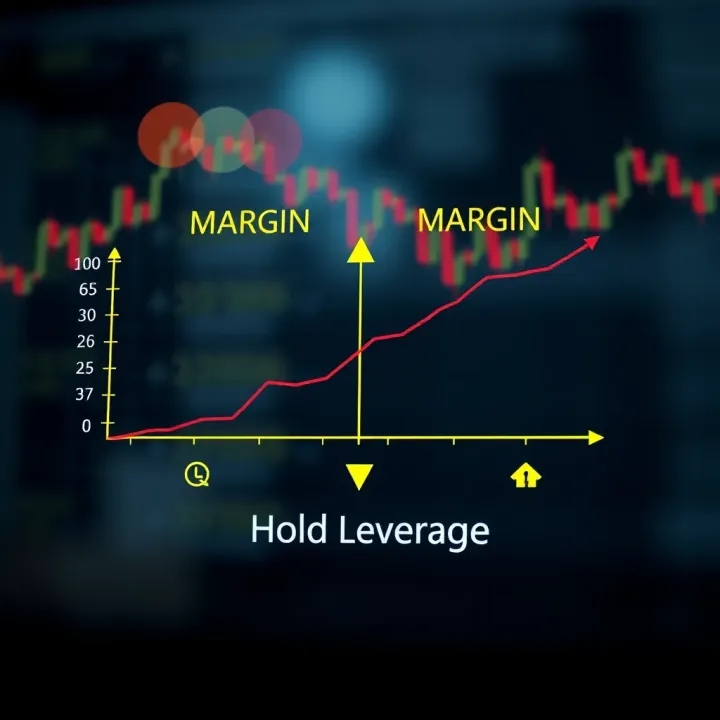
Understanding Margin in Forex Trading for Nigerians
📊 Learn what margin means in forex trading, how Nigerian traders can manage it wisely, understand leverage, broker rules, and avoid big losses.
Edited By
Charlotte Bennett
Forex trading, simply put, means buying one currency while selling another on the global foreign exchange market. For Nigerian investors, it offers a chance to make profits by speculating on currency price movements, especially given the frequent changes in exchange rates between the naira and other major currencies like the US dollar or euro.
At its core, forex trading relies on currency pairs such as USD/NGN or EUR/USD. When you buy a pair, you expect the base currency to strengthen against the quote currency. For example, if you buy USD/NGN, you’re betting the dollar will rise relative to the naira. Trading happens through brokers and online platforms that connect you to the global market, allowing trades 24 hours a day from Monday to Friday.
Forex trading can be very profitable, but without proper knowledge and risk management, it could lead to losses. Nigerian traders must fully understand the mechanics before diving in.
Leverage: Most platforms offer leverage, meaning you can control a larger position than the capital you put in. While this amplifies gains, it also increases potential losses. Caution is vital.
Pips and Lots: Prices move in small units called pips. Trades are made in lots—a standard lot equals 100,000 units of the base currency. Knowing this helps you calculate potential gains or losses.
Volatility: Naira’s rate to the dollar can fluctuate due to government policies, oil prices, or foreign exchange restrictions, creating both risks and opportunities.
Choose a reliable broker familiar with Nigerian regulations. Ensure the broker offers access to currencies and complies with the Central Bank of Nigeria (CBN) rules.
Register an account and verify your identity using your Bank Verification Number (BVN) and other KYC documents.
Deposit funds in naira or foreign currency. Some platforms allow direct naira deposit; others may require USD or euro.
Use demo accounts to practise before risking real money.
Start trading small and gradually build experience while monitoring market news, especially on naira exchange policies.
In Nigeria, popular trading platforms include platforms like MetaTrader 4/5, and brokers integrating Paystack or Flutterwave for deposits. Understanding local regulations, paired with practical experience and disciplined risk management, can help Nigerian investors trade forex more confidently and protect their capital.
This introduction sets the stage for deeper exploration into forex trading mechanics, risks, and opportunities relevant specifically for you as a Nigerian investor.
Understanding forex trading is fundamental for anyone looking to enter the foreign exchange market, especially Nigerian investors seeking new avenues for income. This section provides clear insights into what forex trading entails, how it functions globally, and why it captures the interest of so many Nigerians. By grasping these basics, traders can make informed decisions that minimise risks and maximise potential profits.
Forex trading involves buying and selling currencies against each other to profit from their changing values. Unlike stocks or real estate, forex trading happens in a highly liquid market open 24 hours a day during the workweek. For example, if you believe the US dollar (USD) will strengthen against the Nigerian naira (₦), you can buy USD/NGN currency pairs and sell them later when the dollar value rises. Understanding this basic concept lets you see how traders earn from fluctuations instead of relying solely on long-term investments.
The forex market is the largest financial market worldwide, with an estimated daily turnover exceeding US$6 trillion. It operates through a network of banks, financial institutions, corporations, and individual traders across major financial centres such as London, New York, Tokyo, and Singapore. These centres operate during their local daytime hours, creating a continuous flow of trading activities across different time zones. This global setup allows Nigerian investors to participate at almost any time, reacting to international economic events like US interest rate decisions or European Central Bank policies that directly influence currency values.
Many Nigerians are drawn to forex trading for its accessibility and potential for quick returns compared to traditional investments such as fixed deposits or real estate. Low capital requirements and online trading platforms allow individuals to start with as little as ₦20,000. Moreover, forex trading offers opportunities to hedge against naira depreciation, especially during periods of currency volatility. For instance, during fuel subsidy removal or political uncertainties, forex traders can protect their savings by holding stronger foreign currencies. The increasing availability of mobile trading apps, like those from XM, HotForex, and Alpari, also makes forex an attractive option for young Nigerians looking for flexible ways to supplement their income.
Successful forex trading demands a clear understanding of the market’s mechanisms and the discipline to manage risks. This introduction sets the stage for deeper exploration of how Nigerians can safely and profitably engage in forex trading.
Understanding the core concepts in forex trading is essential for Nigerian investors aiming to navigate the volatile currency market confidently. These fundamentals form the backbone of trading strategies and help traders interpret price movements, manage risks, and maximise profits effectively.
Forex trading always involves buying one currency while simultaneously selling another. These are called currency pairs. The first currency in the pair is the base currency, while the second is the quote currency. For example, in the USD/NGN pair, the US dollar is the base, and the Nigerian naira is the quote. If USD/NGN is quoted at 800, it means one US dollar costs 800 naira.
Prices of currency pairs fluctuate continuously based on economic events, interest rates, and market sentiment. Knowing how to read these quotes is vital. For Nigerian traders, keeping an eye on pairs involving the naira — like USD/NGN or EUR/NGN — helps to anticipate naira's strength or weakness against foreign currencies.
Leverage allows traders to control larger positions with a small capital deposit called margin. For instance, a leverage of 100:1 means with ₦10,000 in your account, you could manage a position worth ₦1,000,000. This magnifies both profits and losses, so Nigerian traders must use leverage carefully to avoid wiping out their investment quickly.
Margin is the money held by your broker as security. If the market moves against your position beyond this margin, the broker will issue a margin call or close your trades to prevent further loss. Therefore, understanding margin requirements and maintaining proper account balance prevent forced liquidation, especially during naira volatility or unexpected global events.
A pip is the smallest price movement a currency pair can make, usually the fourth decimal place (0.0001), but for pairs involving the naira, it may differ due to exchange rate structures. For example, if USD/NGN moves from 800.00 to 800.10, it has moved 10 pips.
Lots represent the size of your trade. A standard lot is 100,000 units of the base currency, but brokers often allow mini and micro lots in smaller sizes suitable for Nigerian retail traders starting with lower capital. Selecting appropriate lot sizes helps manage risk and avoid unnecessary exposure.
The spread is the difference between the buying (ask) and selling (bid) price. It represents the broker's fee for executing transactions. Tighter spreads reduce trading costs and improve potential returns, which matters greatly in active trading with narrow profit margins.
Mastering currency pairs, leverage, margin, pips, lots, and spread helps Nigerian investors make smarter, more confident decisions, preparing them for the practical challenges of forex trading.
Having this foundation clears the way to understanding market actions comprehensively. Next, selecting trustworthy brokers and trading platforms becomes more straightforward once these concepts are clear.
Starting forex trading in Nigeria requires a clear understanding of the practical steps involved to make informed decisions and avoid common pitfalls. It is not just about choosing a broker and jumping in; Nigerian traders must consider local market conditions, payment methods, regulations, and education to trade effectively.
Picking a trustworthy forex broker is the foundation of a successful forex journey. Nigerian traders should prioritise brokers licensed by respected authorities such as the Securities and Exchange Commission (SEC) Nigeria, or international bodies like the Financial Conduct Authority (FCA) or Australian Securities and Investments Commission (ASIC). A reliable broker offers transparent fees, proper customer support, and user-friendly platforms.
For example, brokers like FXTM and XM have local support and multiple deposit options suitable for Nigerian traders. These brokers also provide access to the MetaTrader 4 and 5 platforms, which are popular and easy to navigate. Avoid brokers that promise unrealistic profits or are not well-reviewed by fellow Nigerian traders, as scams are common in this sector.
Forex brokers offer various account types tailored to different levels of experience and capital. Beginners in Nigeria should start with micro or mini accounts that allow trading with small sums—often starting at around ₦10,000. These accounts reduce exposure while traders build their skills.
Demo trading is essential before risking real money. Demo accounts simulate the forex market with virtual funds, letting you practise trade execution, test strategies, and get familiar with the trading platform without financial risk. Many Nigerian traders gain confidence by spending weeks on demo accounts before opening live accounts.
Funding your trading account should be hassle-free and affordable. Nigerian traders have access to local options like bank transfers, USSD payments, and e-wallets such as OPay or Flutterwave. Some brokers accept deposits via Quickteller or pay with local debit cards, easing the naira to dollar conversion process.
Withdrawal procedures are equally important. Legitimate brokers provide clear timelines for fund withdrawals, generally ranging from 24 to 72 hours. Watch out for hidden fees that might erode your profits, especially with repeated withdrawals. Using brokers with straightforward withdrawal policies saves you stress and unnecessary charges.
Always verify if the broker supports your preferred payment method and check reviews on withdrawal efficiency from other Nigerians.
Starting your forex trading journey in Nigeria is achievable with the right broker, practising on demo accounts, and understanding the local payment environment. This practical approach helps you trade confidently while avoiding scams and frustrations.
Managing risks is central to successful forex trading, especially for Nigerian investors facing a volatile market. Forex trading offers attractive profit opportunities, but it can also lead to significant losses if risks are ignored. Handling risks effectively protects your capital and ensures you stay in the game for the long haul.
Forex trading exposes you to various risks, such as market volatility, leverage impact, and emotional bias. Market volatility can cause sudden currency price swings, which catch many traders off-guard. For example, unexpected political events in Nigeria or changes in CBN policies can disrupt currency values sharply.
Leverage amplifies both gains and losses, so while it helps traders control larger positions with smaller capital, it can easily wipe out an account if not managed carefully. Emotional trading—like chasing losses or overtrading during ember months when market patterns shift—often leads to poor decisions and losses.
Stop loss and take profit orders are essential tools to manage risk actively. A stop loss order automatically closes your trade when the price hits a level you can no longer afford to lose, preventing runaway losses. For instance, if you buy USD/NGN and set a stop loss at a 2% loss level, the platform will sell your position once that limit is reached.
Similarly, take profit orders lock in gains by closing trades once a set profit target is met, ensuring you don’t give back earnings during sudden market reversals. Using these orders keeps you disciplined and prevents emotional trading. Most brokers like FXTM or InstaForex offer simple ways to set these orders when opening a trade.
A clear risk management strategy is about balancing how much you risk per trade with your potential reward. Many Nigerian traders limit risk to 1–2% of their trading capital per position. This way, a string of losses won't drain your account entirely. Diversification by trading different currency pairs, such as USD/EUR and GBP/USD, can also reduce risk.
Risk management includes setting realistic goals, avoiding over-leverage, and maintaining trading journals to review mistakes. For example, a trader who used 50:1 leverage without a stop loss during a naira depreciating phase likely faced heavy losses, which disciplined risk management would have prevented.
Managing forex risks is not about avoiding losses completely—it’s about controlling losses so they don’t cripple your overall trading journey.
By understanding common risks, leveraging stop loss and take profit orders, and establishing robust risk management strategies, Nigerian investors can improve their trading resilience and potential to profit steadily in forex markets.
Regulation and safety stand at the core of successful forex trading, especially for Nigerian investors who navigate an increasingly complex market. Understanding the regulatory landscape and adopting safety measures protects traders from fraud and unscrupulous operators. This section breaks down key regulatory bodies and practical steps to help you trade with confidence.
In Nigeria, the Securities and Exchange Commission (SEC) and the Central Bank of Nigeria (CBN) play vital roles in the forex trading ecosystem. While the CBN oversees monetary policy, foreign exchange management, and licensing of authorised dealers, the SEC regulates investment and capital market activities.
For instance, forex brokers operating locally should ideally be registered with SEC Nigeria to ensure compliance with Nigerian laws. Meanwhile, CBN policies influence access to foreign currency and affect the forex market’s liquidity. Traders should watch CBN policy updates closely, as restrictions on forex purchases or repatriation rules can impact trade execution.
Fraudulent schemes in forex trading remain a significant pitfall for many Nigerian investors. Unscrupulous brokers promise quick riches, often with unrealistic returns or pressure tactics. To stay safe, verify brokers with SEC Nigeria and check for membership in credible forex associations.
Beware of unsolicited offers via social media or WhatsApp that lack a legitimate company presence. Always question brokers demanding large upfront deposits or pushing binary options disguised as forex. Common red flags include lack of transparent pricing, refusing withdrawals, or ambiguous trading platforms.
Prudent risk management and vigilance are your best defence. Start with demo accounts provided by regulated brokers before committing real funds. Use strong passwords and enable two-factor authentication where possible to safeguard your trading accounts.
Always demand clear trading terms and avoid brokers offering excessive leverage, which heightens risk. Regularly review your trading statements and keep transaction records for reference. Lastly, maintain updated knowledge by following SEC Nigeria advisories and CBN announcements relevant to forex trading.
Trading forex in Nigeria requires careful navigation of regulations and risks. Staying informed, choosing trusted brokers, and practising disciplined safety measures can shield you from common pitfalls and promote sustainable profits.
By paying attention to these regulatory and safety cues, Nigerian forex traders position themselves to operate legally and protect their investments in a sector that can otherwise be risky.
📊 Learn what margin means in forex trading, how Nigerian traders can manage it wisely, understand leverage, broker rules, and avoid big losses.
Discover how Nigerian investors can tap into forex trading's accessibility, liquidity, and flexibility 🌍📈. Boost your financial goals with smart strategies and tech tools!

Explore synthetic trading in Nigeria's markets 📈. Learn how synthetic positions work, common strategies, risks, and practical tips for traders and investors.

📉 Understand deviation in forex trading: what causes it, how it affects your trades, and practical tips to manage risks and cut unexpected costs effectively.
Based on 10 reviews