

How Pips Calculators Help Forex Traders in Nigeria
📊 Master forex trading in Nigeria with pips calculators that show how much each price move means for your trade. Manage your ₦ risk smartly and boost results today!
Edited By
Amelia Clarke
In forex trading, understanding how to calculate pips is non-negotiable if you want to manage your risk and profits well. A pip — short for "percentage in point" — measures the smallest price move a currency pair can make. Basically, it’s how traders quantify shifts in exchange rates.
You might be asking, why should you really bother about pips? The thing is, pips allow you to determine your potential gain or loss with precision. Say you're trading the USD/NGN pair; knowing the pip value translates the price movement into actual Naira gains or losses. Without this, managing your trading account is like going on a journey with a blindfold.
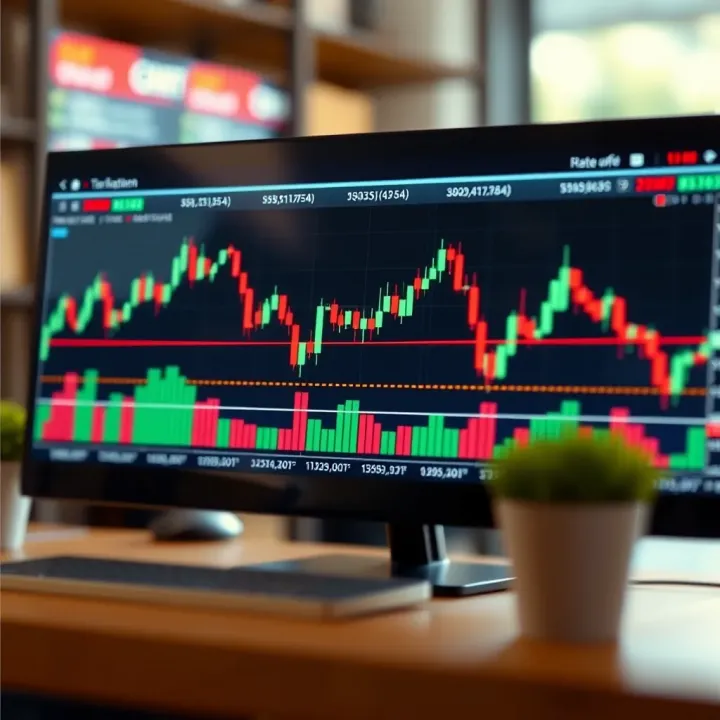
Different currency pairs have pips calculated in slightly different ways. For pairs quoted to four decimal places like EUR/USD or GBP/USD, one pip equals 0.0001 of the currency quote. But for pairs involving the Japanese yen (JPY), which are quoted to two decimal places, one pip equals 0.01. This distinction is vital for calculating your exact profit or loss.
In practice, here’s what you need to focus on:
Locate the last decimal place in the quoted price to identify a pip.
Calculate pip value by multiplying the pip size by your trade volume.
Convert pip value into your account currency if it differs from the quote currency.
For example, if you buy 10,000 units of EUR/USD at 1.1200 and the price rises to 1.1250, that’s a 50-pip gain. To find the value in USD, multiply 10,000 units by 0.0001 pip size, which equals $1 per pip. Your 50-pip gain thus equals $50.
Accurate pip calculation is key to risk management—it dictates your stop-loss and take-profit settings, which are the backbone of any disciplined trading.
For Nigerian traders, tools like MT4/MT5 platforms or mobile apps from brokers such as FXTM or Alpari make pip calculation straightforward. These platforms often show pip values automatically, easing the process.
Understanding how to calculate pips helps you set realistic targets and avoid slipping into emotional trading. It’s an essential skill that every forex trader in Nigeria needs to sharpen if serious about the game.
Understanding what a pip stands for is the first step for anyone serious about forex trading. A pip, short for "percentage in point," is the smallest price move in a currency pair that's measured in the forex market. It helps traders and investors track price changes precisely and manage profits or losses effectively.
A pip represents the minimum change in the exchange rate of a currency pair. For most pairs, it's the fourth decimal place—meaning if the EUR/USD pair moves from 1.1200 to 1.1201, it has moved one pip. This tiny movement can have a large impact when you trade sizeable volumes. Consider a trader who buys ₦1 million worth of USD/EUR; even a few pips movement can translate to a notable gain or loss.
Pips are crucial because they standardise how profit or loss is measured across different forex trades. Instead of worrying about dollar values which fluctuate according to the trade size and exchange rate, traders focus on pips to compare performances uniformly. It also aids in setting stop-loss and take-profit levels with precision.
The role of the pip goes beyond just measuring price shifts—it acts as the yardstick for risk management, enabling you to define exactly how much you're willing to lose or gain per trade.
Typically, a pip is the movement of 0.0001, or one basis point, in most currency pairs quoted to four decimal places. However, there are exceptions. For currency pairs involving the Japanese yen (JPY), a pip is measured as a change in the second decimal place, or 0.01. For example, USD/JPY moving from 110.00 to 110.01 is one pip.
The use of pips is consistent across standard, cross, and exotic pairs, but their value depends on the currency pair's pricing convention and the amount traded. This means the actual monetary value of a pip varies—₦50 per pip on one pair might translate differently on another.
Most trading platforms now show prices that include fractional pips, often called pipettes, which are one-tenth of a pip. This helps traders enter more precise levels, but the main unit for measuring movements remains the pip.
Understanding standard pip measurement allows you to accurately calculate the risk and reward of your positions, especially important in markets with high volatility or during periods surrounding economic announcements.
Knowing how pips are defined and used equips you to make smarter trades and manage your forex portfolio better.
Understanding the factors influencing pip value is essential for traders aiming to make sound decisions in the forex market. The pip value does not remain constant across all trades; it varies depending on several elements tied to the currency pair traded, prevailing exchange rates, and the size of the trade. Grasping these distinctions helps manage risk effectively and estimate potential profits or losses accurately.
Currency pairs are typically categorised into major, cross, and exotic pairs, each with different pip value characteristics. Major pairs, like EUR/USD or USD/JPY, usually have a direct relation with the US dollar and follow a standard pip value measure — most often 0.0001 for majors. Exotic pairs, which feature currencies from emerging markets like the Nigerian Naira (NGN) paired with USD, can have larger pip values due to higher volatility and different quoting conventions. For instance, USD/NGN might quote pips differently because of the exchange rate's scale and market liquidity.
The quote convention also matters. For pairs where USD is the quote currency (the second currency), one pip usually represents 0.0001 of the quote currency’s unit. However, if USD is the base currency (the first currency), the pip value calculation adjusts because the pip size reflects the quote currency’s structure. Traders should always check the pair’s quote convention before calculating their pip value.

Exchange rates directly influence how much a pip movement is worth in a trader’s account currency. When trading a pair that does not include your account currency, such as a USD-based trader trading EUR/GBP, currency conversion plays a role in calculating pip value. For example, if the exchange rate between GBP and USD fluctuates, the value of a pip in USD changes even if the pip movement in EUR/GBP remains constant.
This effect is visible often for Nigerian traders whose accounts might be denominated in naira but trade pairs like EUR/USD. Any change in the USD/NGN rate impacts the naira value of the pip. Therefore, it is critical to monitor exchange rates and update pip calculations accordingly to maintain an accurate understanding of positions.
Remember, ignoring exchange rate shifts can cause surprises in profit or loss assessments, especially when dealing with cross-border trades involving the naira.
A trader’s position size heavily affects pip value. Standard lots (100,000 units), mini lots (10,000 units), and micro lots (1,000 units) all translate a pip movement into different monetary values. For example, in EUR/USD, a one-pip move in a standard lot equals roughly $10, while the same move in a micro lot would be around 10 cents.
Compared to Lagos danfo traffic, lot sizes can either be like a congested large bus carrying many passengers (standard lot) or a smaller okada weaving through traffic (micro lot). Traders must adjust their pip calculations based on these lot sizes to gauge exposure and risk better. Overlooking lot size may cause misjudgment in how much a single pip gain or loss affects one's capital.
In summary, the pip value changes with the currency pair’s type and quote method, exchange rate fluctuations, and the traded lot size. Careful attention to these factors gives traders an edge in risk management and profit calculation.
Understanding these components prepares you for calculating pip values with precision further on in this guide. Make sure each pip calculation reflects your trade conditions to avoid missteps in your forex ventures.
Understanding how to calculate pip value is a key skill for forex traders, especially if you want to manage your risk and maximise profits effectively. This guide walks you through the process in clear steps, making it easier to determine the real worth of each pip movement in your trades. The exact value depends on factors like the currency pair traded, lot size, and your account currency.
For major currency pairs where the US dollar (USD) is usually the quote currency, pip calculation is straightforward. Each pip typically equals 0.0001 unit of the quote currency. Suppose you trade 1 standard lot (100,000 units) of EUR/USD, and the pip size is 0.0001 USD. The pip value would be calculated as:
Pip Value = (Pip Size / Exchange Rate) × Lot Size
Here, (0.0001 / 1.1000) × 100,000 = approximately $9.09
This means a one-pip move results in a gain or loss of about $9.09. Such simple calculations apply well to pairs like USD/JPY, GBP/USD, and USD/CHF, helping traders estimate profits and losses precisely.
Crosses and exotic pairs often don’t have USD as the quote currency, so pip values need adjustment. For example, in EUR/GBP, the pip represents 0.0001 GBP. To find pip value in your account currency (say, USD or ₦), you must convert the pip value using the current exchange rate.
Imagine trading 1 standard lot of EUR/GBP at 0.8500 with your account in USD:
Pip Value (GBP) = 0.0001 × 100,000 = 10 GBP
Then convert to USD: 10 GBP × 1.3000 (GBP/USD rate) = $13
For exotic pairs like USD/TRY, volatility and spreads might impact pip values, so careful calculation and risk management are crucial.
Many Nigerian traders hold account currencies in USD or NGN (Nigerian Naira). When your account currency differs from either base or quote currency, converting pip value becomes essential.
A common scenario is trading USD/NGN or another pair involving Naira. Assume you trade 1 lot of USD/NGN at an exchange rate of ₦460 to $1:
Pip size: 0.0001 NGN
Pip Value in NGN: 0.0001 × 100,000 = ₦10
Since your account is in NGN, no further conversion is needed.
But if your account is in USD and you trade EUR/USD:
Calculate pip value in EUR, then convert to USD using EUR/USD exchange rate.
Calculating pip values correctly gives you practical control over how much each price move means for your portfolio. It helps you size trades properly and avoid unexpected losses or gains, especially when dealing with cross and exotic currency pairs.
By mastering these calculations, Nigerian traders can confidently approach the forex market, knowing exactly how every tick affects their wallet.
Understanding how to calculate pips in real scenarios helps traders measure potential gains or losses accurately. It's one thing to know what a pip is, and quite another to apply the calculation in live trades involving different currency pairs. By looking at tangible examples, you can better grasp how pip values shift with base and quote currencies, and how this affects your trading decisions. For Nigerian traders, being able to quickly calculate or estimate pip values can be the difference between sound money management and unnecessary risk.
When the US dollar (USD) is the quote currency, pip calculation tends to be straightforward. Consider the currency pair EUR/USD trading at 1.1800. One pip here equals 0.0001 USD. Suppose you open a standard lot trade of 100,000 euros; a one-pip movement will equate to $10 (100,000 x 0.0001). If the price moves from 1.1800 to 1.1810, you gain $100. This example shows how pip value relates directly to lot size when the dollar is the quote currency. For traders dealing with pairs quoted against USD, this makes assessing risks and profits more predictable.
Issues become a bit more involved when USD is the base currency. Take USD/JPY at 110.00; 1 pip equals 0.01 yen because of JPY's two decimal place convention. For a standard 100,000 USD lot, each pip movement is 1,000 yen (100,000 x 0.01). However, since profits or losses are in yen and most traders calculate in USD, you must convert the pip value back to USD using the current exchange rate (1/110 = 0.00909). Therefore, 1,000 yen pip movement equals roughly $9.09. This back-and-forth step underlines the importance of considering currency conversion when USD is the base currency.
Forex traders in Nigeria often deal with naira (₦) when calculating pip values indirectly through USD-paired currencies. Suppose you trade USD/NGN where the rate is ₦460 per dollar and you trade a mini lot of 10,000 USD. One pip (0.0001 USD) stands for $1 per 10,000 USD traded. In naira terms, $1 equals ₦460, so the pip value is ₦460. A 20-pip movement equates to ₦9,200 profit or loss. This is significant when naira volatility is high, so keeping an eye on pip translations helps you manage risk better.
Benchmarks like this also extend to other pairs involving the euro (EUR/NGN) or British pound (GBP/NGN). Traders often convert pip values via their USD equivalence to understand the real impact on naira holdings. Nigerian traders using platforms like OPay or GTBank can use such practical knowledge to make smarter decisions and safeguard their investments.
Practical examples bridge theory and actual trading, making pip calculations less abstract and more useful in daily forex dealings. Always consider the base and quote currency relationship, lot sizes, and local currency dynamics when working out pip values.
By practising these calculations in different scenarios, you'll build confidence navigating forex markets, especially in the diverse currency environment Nigerian traders face.
Calculating pips manually can be tedious and prone to errors, especially when dealing with multiple currency pairs or varying lot sizes. That's why traders rely heavily on specialised tools and resources to make pip calculation seamless and accurate. Using these tools not only saves time but also helps traders manage risk better by understanding exact pip values for differing forex pairs and trade volumes.
Online pip calculators are widely available on forex broker websites and independent trading portals. They let you input the currency pair, trade size, and account currency to instantly receive the pip value. For example, if you're trading the USD/NGN pair with a standard lot size of 100,000 units, these calculators provide the pip value in naira, helping you estimate potential profits or losses clearly.
Several platforms like MetaTrader 4 and 5 have built-in pip calculators integrated with live market data, so your pip values update in real-time with fluctuating exchange rates. This feature is especially useful during volatile periods like ember months when naira depreciation impacts pip valuations significantly.
Mobile apps have made forex trading and pip calculation more accessible to Nigerian traders on the move. Apps such as OANDA, FXTM, and local favourites like FXPro Nigeria offer pip calculators within their suite. Traders can quickly check pip values on their smartphones without the need to go through complex manual computation.
These apps also support notification alerts for trade levels, assisting traders in monitoring pips gained or lost during trading sessions amid Nigeria’s notorious power outages, where quick decisions are essential before generator fuel runs out.
Despite the convenience of calculators and apps, some traders prefer spreadsheets for flexibility and control. Creating an Excel or Google Sheets template allows you to set formulas tailored to your trading needs.
For instance, you can programme the spreadsheet to calculate pip value based on different lot sizes, exchange rates, and currency pairs relevant to Nigerian traders such as USD/NGN, EUR/USD, or GBP/USD. While it requires initial setup, once done, it serves as a quick reference and audit tool for your trades.
Manual calculation methods remain important for deeper understanding or when digital tools are inaccessible. Knowing the formula and process helps you verify automated pip values and handle edge cases like exotic pairs where standard calculators might fail.
Efficient pip calculation tools and resources are indispensable for Nigerian forex traders aiming to make informed decisions and safeguard their investments against currency fluctuations and market volatility.
Using these tools prudently improves trading accuracy and confidence, ultimately enhancing your ability to navigate the forex markets effectively.
📊 Master forex trading in Nigeria with pips calculators that show how much each price move means for your trade. Manage your ₦ risk smartly and boost results today!
📈 Learn how forex trading works in Nigeria, its risks, top platforms, and CBN regulations to trade confidently and boost your ₦ income effectively.
📈 Learn how Nigerians can trade forex online safely, navigate platforms, manage risks, and understand local regulations for smarter ₦ investments in forex markets.

Discover how Nigerian investors can tap into forex trading's accessibility, liquidity, and flexibility 🌍📈. Boost your financial goals with smart strategies and tech tools!
Based on 8 reviews